
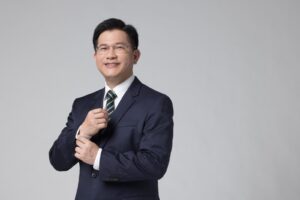
In a world marked by rising conflicts, economic coercion, and disinformation campaigns, Taiwan has positioned itself as a steadfast defender of democracy and stability in the Indo-Pacific. Speaking on the global stage, Lin Chia-lung, Minister of Foreign Affairs of the Republic of China (Taiwan), underscored the importance of uniting democracies and called for Taiwan’s rightful inclusion in the international community.
“Peace cannot be taken for granted in today’s fragile global environment,” Lin said. “Authoritarian regimes are increasingly using gray-zone tactics to undermine the rules-based international order. Democracies must stand together to safeguard our cherished values and way of life.”
Taiwan, located on the first island chain of the Indo-Pacific, plays a vital role in countering authoritarian expansionism. Beyond its geopolitical position, Taiwan is also a powerhouse in technology and trade. As the 21st-largest economy, it produces more than 60 percent of the world’s semiconductors and 90 percent of the most advanced chips.
“Our economic strength is not just Taiwan’s asset—it fuels global growth,” Lin explained. “By leading in semiconductors, AI, and digitalization, Taiwan proves that democracy can thrive while contributing to global prosperity.”
Under President Lai Ching-te’s leadership, Taiwan has launched the Four Pillars of Peace action plan, which emphasizes raising defense spending and building whole-of-society resilience. At the same time, Taiwan continues to advocate peaceful dialogue with Beijing.
“Taiwan does not seek conflict, nor will we provoke it,” Lin stated. “We urge Beijing to resume dialogue with us on the basis of parity and dignity.”
Taiwan’s Ministry of Foreign Affairs has also embraced Integrated Diplomacy, combining diplomatic, defense, technological, and economic strengths to enhance Taiwan’s international presence. Lin described this as a “smart power approach” that allows Taiwan to navigate complex relations and support global stability.
Through initiatives such as the Diplomatic Allies Prosperity Project, Taiwan is partnering with nations to drive sustainable development. For example, Taiwan has worked with Paraguay to introduce a hospital information system, with Eswatini to develop oil reserve facilities, and with Palau to advance its transformation into a smart and sustainable island nation.
“These projects reflect Taiwan’s commitment to creating mutual prosperity with our allies,” Lin said. “They show that Taiwan is a reliable partner in promoting sustainable international cooperation.”
Despite these contributions, Taiwan remains excluded from the United Nations system, primarily due to China’s misrepresentation of UNGA Resolution 2758. Lin was direct in addressing this.
“Let us be clear—Resolution 2758 does not mention Taiwan,” he emphasized. “It does not state that Taiwan is part of the People’s Republic of China, nor does it give the PRC the right to represent Taiwan in the UN. Yet, China continues to weaponize this resolution to block our participation.”
Lin noted growing global recognition of Taiwan’s role, with countries at forums like the G7 emphasizing peace and stability in the Taiwan Strait. Legislatures worldwide have also clarified that Resolution 2758 neither defines Taiwan’s status nor prevents its participation in international organizations.
“As the UN celebrates its 80th anniversary, and with just five years left to achieve the Sustainable Development Goals, it is time for the UN to honor its promise of ‘leaving no one behind,’” Lin urged. “Taiwan’s inclusion is essential to making the UN truly better together.”
In closing, Lin called upon the international community to support Taiwan’s rightful place on the global stage.
“Taiwan invites the world to ‘chip in,’” Lin said, playing on the island’s semiconductor strength. “Together, we can create a brighter future for the Indo-Pacific and for the world.”
