
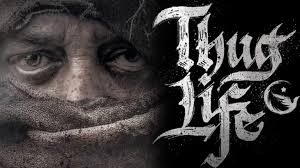
“Thug Life,” directed by the legendary Mani Ratnam, brings together an exciting mix of seasoned and contemporary talent — headlined by Kamal Haasan and Simbu — in what promises to be an intense gangster saga. With the iconic Nayakan duo of Ratnam and Kamal Haasan reuniting, expectations were understandably sky-high. The film, while grand in scope and rich in technical finesse, struggles to deliver a consistently compelling narrative.
What Works
At the heart of Thug Life is Kamal Haasan’s portrayal of Rangaraya Shaktivel, a powerful figure whose personal and professional relationships drive the story forward. Haasan’s screen presence is magnetic in the early portions — subtle, commanding, and effortlessly impactful. His scenes, especially in the initial flashback portions, anchor the film with a certain gravitas.
Technically, Thug Life is a polished product. Ravi K Chandran’s cinematography offers stunning visuals, with a muted yet stylish palette that fits the gangster mood. A.R. Rahman’s score, though underutilized at times, adds depth in key moments and elevates a few scenes that otherwise feel flat. The action choreography, particularly the train station fight, stands out for its sleek execution.
The ensemble cast, including seasoned performers like Nassar, Mahesh Manjrekar, Abhirami and Jojo George, is solid on paper, and there’s an attempt to create an emotionally layered gangster family drama that goes beyond bullets and blood.
Where It Falters
Despite the promise, the film’s storytelling doesn’t quite rise to the occasion. The emotional core of Thug Life — the relationship dynamics between Shaktivel and Amaran (Simbu), and others — lacks the depth needed to make the drama resonate. The screenplay meanders, especially in the first half, where the narrative feels slow and emotionally undercooked.
Simbu, playing Amaran, gets a meaty role on paper, but his arc never fully takes off. His screen time is decent, but his character lacks memorable moments or emotional heft. It’s a role that feels more decorative than integral.
Trisha, as always, looks graceful, but her role is brief and underwritten. Even her much-hyped song “Sugar Baby” feels like an afterthought in the narrative. Other relationships — particularly between Shaktivel and Nassar or Shaktivel and Trisha — are touched upon but not explored with the intensity they deserve.
The second half, expected to bring in power-packed action and emotional catharsis, instead moves in a disappointingly flat direction. Shaktivel’s return, which should have evoked fear and redemption, feels underwhelming. The revenge arc unfolds in a predictable and emotionally detached manner, lacking the punch Mani Ratnam is known for.
Thug Life is a film with impeccable technical craft and a star-studded cast, but one that struggles to deliver an emotionally gripping or thrilling narrative. Kamal Haasan carries the film on his shoulders in the first half, but even his brilliance isn’t enough to salvage the weak second half.
For fans of Mani Ratnam and Kamal Haasan, Thug Life may still offer moments of nostalgia and visual pleasure. However, those looking for a compelling gangster drama in the vein of Nayakan or Raavanan might leave the theatre wanting more.
A visually rich film with strong intentions, but ultimately let down by a lack of emotional depth and narrative impact.
