
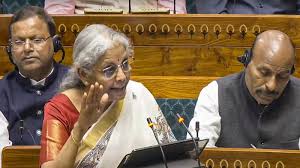
 New Delhi, Feb 3 Paraphrasing Abraham Lincoln, Finance Minister Nirmala Sitharaman on Sunday described the Union Budget as “by the people, for the people, of the people”, and said Prime Minister Narendra Modi was fully behind the idea to cut taxes for middle class but it took time to convince the bureaucrats.
“We have heard the voice of the middle class” who had been complaining about their aspirations not being met despite being honest taxpayers, she told PTI in an interview.
With the honest and proud taxpayers wanting the government to do more to limit the impact of factors like inflation, the prime minister was quick to task Sitharaman to look at ways to give relief.
While Modi was quick to agree to tax relief, it took a bit of convincing to get on board the officials in the finance ministry and the Central Board of Direct Taxes (CBDT) – who are tasked to ensure revenue collection to meet welfare and other schemes, she said.
Presenting her eighth straight budget, Sitharaman on Saturday announced an increase in the personal income tax threshold below which taxpayers owe no tax to Rs 12 lakh, up from Rs 7 lakh, as well as a regij in tax brackets that would help those earning higher than that save up to Rs 1.1 lakh.
The Rs 5 lakh hike in exemption limit is the biggest-ever and equals all the reliefs that were given between 2005 and 2023.
“I think the prime minister put it succinctly, he said it’s the people’s Budget, it is the Budget which the people wanted.”
Asked to describe the ethos of the budget in her own words, she said, “as they say in democracy in Abraham Lincoln’s words, it is Budget by the people, of the people for the people.”
She said the new rates would “substantially reduce the taxes of the middle class and leave more money in their hands, boosting household consumption, savings and investment”.
Explaining the thought that went behind the big announcement, Sitharaman said the tax cuts were in the works for sometime.
One of the ideas was to make the direct tax simpler and easier to comply with. Work on this started in the July 2024 Budget and now a new law is on the anvil, which will simplify the language, reduce compliance burden and be a bit more user-friendly.
