
 Curate’s egg
In a world where good is diminishing and evil is rising, some might say we are at the end of times, often referred to as the Kali Yuga. This concept of an era overrun by injustice and treachery forms the crux of “Vasco Da Gama.” Set in a near-future where the good are punished and the wicked reign freely, the film explores what society might look like if the roles of right and wrong were reversed.
The film centers around Arthana Binu’s character, a virtuous woman who dreams of marrying a good man. However, her father, played by Anand Raj, wants her to marry a certified scoundrel, believing there is no place for good people in society anymore. Despite her father’s wishes, Arthana falls in love with Nakul, a genuinely good man. But in a twisted turn of events, Nakul ends up in prison, and what follows is a chaotic mix of conflicts between good and evil within the prison walls.
The story takes a satirical approach, portraying the absurdity of a world where the virtuous are incarcerated while the vile are free to cause mayhem. The film’s tone is set early on with a controversial oath featured in the trailer, where a character swears to continue being an alcoholic for the sake of the nation’s revenue and to divide people based on caste, religion, and language to disrupt societal peace. This sets the stage for a narrative that, while humorous, carries a biting commentary on the state of society.
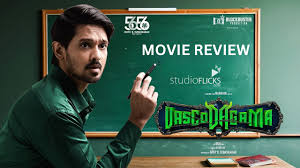
Nakul sheds his chocolate-boy image to portray a rugged, morally upright character who becomes a victim of the corrupt system. His transformation from Vasudevan, a free man, to Jack, a prisoner, is well-executed, though the role does not offer much scope for depth. Arthana Binu, who plays the female lead, unfortunately, does not get much opportunity to showcase her acting skills, as her character remains largely underdeveloped.
Vamsi Krishna, as the menacing antagonist, stands out in his role, particularly when he dons a priestly garb to hide his villainy. The film features a large ensemble cast, but most characters appear fleetingly, with limited scope for making a lasting impression.
Director RJGK attempts to blend dark comedy with a satirical narrative, a mix that works better in the second half of the film. While the first half feels disjointed with random, over-the-top scenes, the second half brings some relief with a more cohesive storyline, albeit still peppered with absurdist humor.
Cinematographer Satheesh Kumar N.S. and music director Arun N.V. deliver competent work that complements the film’s modest budget and the director’s vision. However, the film falls short in fully capitalizing on its intriguing premise, often resorting to slapstick humor rather than delving into the more serious potential of the story.
“Vasco Da Gama” is a film that, despite its flaws, offers some interesting ideas wrapped in satire. Its take on a dystopian society where the good suffer and the evil thrive could have been more impactful if the screenplay had been tighter and the humor more refined. The film will likely appeal to those who enjoy light-hearted comedies and can overlook the lack of logic for the sake of a few laughs.
