
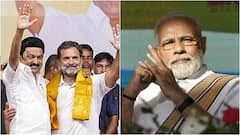
Today marks a pivotal moment in India’s democratic journey as Tamil Nadu heads to the polls for 39 Lok Sabha constituencies. With a staggering 950 candidates vying for victory, over 6.23 crore voters are poised to cast their ballots across nearly 68,000 polling stations. However, the suspense will linger until June 4, as the counting of votes is scheduled after the conclusion of all seven phases of polling.
In the lead-up to the polls, certain constituencies gained prominence, notably Coimbatore, where BJP State President is contesting. A moment that captured widespread attention was Rahul Gandhi’s visit to the constituency, where he endeared himself by purchasing sweets for his ‘brother Stalin.’ This spontaneous gesture, captured on video and publicized by the DMK’s IT wing, overshadowed the campaigns of several national leaders of the BJP, including Narendra Modi, Amit Shah, J P Nadda, Rajnath Singh, and Nirmala Sitharaman.
The campaign witnessed various issues being brought to the fore, including the ceding of Katchatheevu to Sri Lanka in 1974 and the rise in drug usage in the state. Parties like BJP, AIADMK, PMK, and NTK vowed to tackle the drug menace if elected. Key constituencies such as Dharmapuri, where PMK’s Sowmiya Anbumani is contesting, have become focal points of attention.
Prominent faces in the electoral fray include DMK’s Dayanidhi Maran (Central Chennai), A Raja (Nilgiris), Kanimozhi (Thoothukudi), BJP’s L Murugan (Nilgiris), Tamilisai Soundararajan (South Chennai), former Chief Minister O Panneerselvam (Ramanathapuram), Congress party’s Karti Chidambaram (Sivaganga), AIADMK’s J Jayavardhan (South Chennai), and AMMK chief TTV Dhinakaran.
The campaign narratives have been intense, with the BJP targeting the DMK on corruption allegations and dynasty politics. In contrast, the DMK has emphasized the BJP’s alleged neglect of Tamil Nadu and its encroachment on the state’s autonomy.
