
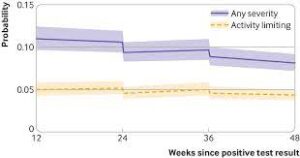
 Long Covid is less likely among the vaccinated before infections, but among those unvaccinated, the risk is four times more, a study revealed.
The study published by The BMJ showed that receiving at least one dose of Covid-19 vaccine before the first infection is strongly associated with a reduced risk of developing long Covid.
Researchers from the University of Gothenburg, Sweden, said their results “highlight the importance of primary vaccination against Covid-19 to reduce the burden of post-Covid conditions in the population”.
The team investigated the effectiveness of primary Covid vaccination (the first two doses and the first booster dose within the recommended schedule) against Long Covid conditions in 589,722 adults (aged 18 and over).
Individuals were followed from a first Covid infection until a diagnosis of Long Covid condition, vaccination, reinfection, death, emigration or end of follow-up whichever came first. The average follow-up was 129 days in the total study population (vaccinated: 197 days, not vaccinated: 112 days).
Of the 299,692 vaccinated individuals with Covid, 1,201 were diagnosed with Long Covid during follow-up, compared with 4,118 of 290,030 unvaccinated individuals.
Those who received one or more Covid vaccine before the first infection were 58 per cent less likely to receive a diagnosis of post-Covid condition than unvaccinated individuals.
