
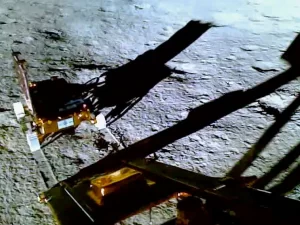
 Sriharikota, Oct 2: As the sun sets on the lunar landscape, it casts long shadows over the Shiv Shakti Point, the historic landing site of India’s Chandrayaan-3 mission.
The onset of the lunar night, a period of darkness lasting approximately 14 Earth days, signals the end of all the attempts to revive the lander Vikram and rover Pragyan, despite its end of mission a month ago. Sunlight began receding on Shiva Shakti Point on September 30.
Multiple attempts were being made in hopes that the duo could have survived the previous cycle of the lunar night. Both the lander-rover duo had completed the mission and were put into sleep mode. The European station in Kourou and ISTRAC, Bengaluru had been pinging but with no results.
The Chandrayaan-3 mission, launched by the Indian Space Research Organisation (Isro), made history when it successfully landed near the Moon’s south polar region on August 23. This marked India as the first country to achieve such a feat.
The landing site, named Shiv Shakti Point, is nestled between the Manzinus C and Simpelius N craters, approximately 4,200 kilometers from the lunar north pole.
The name ‘Shiv Shakti’ was chosen to acknowledge the significant role of women scientists in the mission. However, the lunar nightfall brings an inevitable end to the mission, as the harsh conditions make survival impossible for the lander and rover.
