
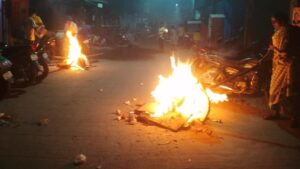
 The Bhogi festival, traditionally celebrated across Tamil Nadu as the first day of the Pongal festivities, saw widespread observance in Chennai early this week.
As people prepared for the main Pongal festival, households followed the age-old custom of burning old and unused items, marking the transition from the old to the new.
Bhogi is observed on the last day of the Tamil month of Margazhi and is considered an auspicious start to the four-day Pongal season. Traditionally, families light bonfires with wooden logs and agricultural waste before sunrise, symbolizing the cleansing of negativity from the past year.
In Chennai, the celebrations were vibrant with people gathering around bonfires and children enthusiastically beating traditional drums as part of the festivity.
However, these celebrations had an environmental cost. The burning of various materials—especially without proper segregation—generated thick smoke that covered parts of the city in haze. Several areas reported poor visibility, and numerous residents, especially the elderly and those with respiratory issues, experienced discomfort while commuting.
According to air quality readings in Chennai, pollution levels rose significantly in several localities. For example:
Manali: AQI 140, Ennore: AQI 116,
Arumbakkam: AQI 111, Velachery: AQI 76, Perungudi: AQI 100,
Royapuram: AQI 52.
Highest in Tamil Nadu: Gummidpoondi at AQI 196
These values indicate a noticeable deterioration in air quality, particularly due to smoke from burning waste materials.
The spike in air pollution affected many residents, with motorists struggling to see clearly through the smoke early in the morning, and individuals with pre-existing health conditions finding it difficult to breathe normally. According to other reports, the dense smoke even impacted flight operations at Chennai Airport due to reduced visibility, leading to delays and operational disruptions. .
Environmental experts and authorities have repeatedly urged residents to adopt eco-friendly Bhogi practices, such as avoiding the burning of plastics, tyres, and other hazardous materials. These traditional celebrations, while culturally important, increasingly pose health risks due to air pollution when not handled responsibly.
As the main Pongal festival approaches, officials and environmental bodies continue to encourage the public to celebrate in ways that protect air quality and community health.
