
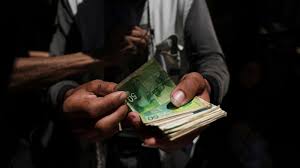
 Gaza, July 12: Cash is the lifeblood of the Gaza Strip’s shattered economy, and like all other necessities in this war-torn territory — food, fuel, medicine — it is in extremely short supply.
With nearly every bank branch and ATM inoperable, people have become reliant on an unrestrained network of powerful cash brokers to get money for daily expenses — and commissions on those transactions have soared to about 40 per cent.
“The people are crying blood because of this,” said Ayman al-Dahdouh, a school director living in Gaza City. “It’s suffocating us, starving us.”
At a time of surging inflation, high unemployment and dwindling savings, the scarcity of cash has magnified the financial squeeze on families — some of whom have begun to sell their possessions to buy essential goods.
The cash that is available has even lost some of its luster. Palestinians use the Israeli currency, the shekel, for most transactions. Yet with Israel no longer resupplying the territory with newly printed bank notes, merchants are increasingly reluctant to accept frayed bills.
Gaza’s punishing cash crunch has several root causes, experts say.
To curtail Hamas’ ability to purchase weapons and pay its fighters, Israel stopped allowing cash to enter Gaza at the start of the war. Around the same time, many wealthy families in Gaza withdrew their money from banks and then fled the territory. And rising fears about Gaza’s financial system prompted foreign businesses selling goods into the territory to demand cash payments.
As Gaza’s money supply dwindled and civilians’ desperation mounted, cash brokers’ commissions — around 5 per cent at the start of the war — skyrocketed.
Someone needing cash transfers money electronically to a broker and moments later is handed a fraction of that amount in bills. Many brokers openly advertise their services, while others are more secretive. Some grocers and retailers have also begun exchanging cash for their customers.
“If I need USD 60, I need to transfer USD 100,” said Mohammed Basheer al-Farra, who lives in southern Gaza after being displaced from Khan Younis. “This is the only way we can buy essentials, like flour and sugar. We lose nearly half of our money just to be able to spend it.”
In 2024, inflation in Gaza surged by 230 per cent, according to the World Bank. It dropped slightly during the ceasefire that began in January, only to shoot up again after Israel backed out of the truce in March.
Cash touches every aspect of life in Gaza
About 80 per cent of people in Gaza were unemployed at the end of 2024, according to the World Bank, and the figure is likely higher now. Those with jobs are mostly paid by direct deposits into their bank accounts.
But “when you want to buy vegetables, food, water, medication — if you want to take transportation, or you need a blanket, or anything — you must use cash,” al-Dahdouh said.
Shahid Ajjour’s family has been living off of savings for two years after the pharmacy and another business they owned were ruined by the war.
“We had to sell everything just to get cash,” said Ajjour, who sold her gold to buy flour and canned beans. The family of eight spends the equivalent of USD 12 every two days on flour; before the war, that cost less than USD 4.
Sugar is very expensive, costing the equivalent of USD 80-100 per kilogram, multiple people said; before the war, that cost less than USD 2.
Gasoline is about USD 25 a litre, or roughly USD 95 a gallon, when paying the lower, cash price.
Bills are worn and unusable
The bills in Gaza are tattered after 21 months of war.
Money is so fragile, it feels as if it is going to melt in your hands, said Mohammed al-Awini, who lives in a tent camp in southern Gaza.
Small business owners said they were under pressure to ask customers for undamaged cash because their suppliers demand pristine bills from them.
Thaeir Suhwayl, a flour merchant in Deir al-Balah, said his suppliers recently demanded he pay them only with brand new 200-shekel (USD 60) bank notes, which he said are rare. Most civilians pay him with 20-shekel (USD 6) notes that are often in poor condition.
On a recent visit to the market, Ajjour transferred the shekel equivalent of around USD 100 to a cash broker and received around USD 50 in return. But when she tried to buy some household supplies from a merchant, she was turned away because the bills weren’t in good condition.
