
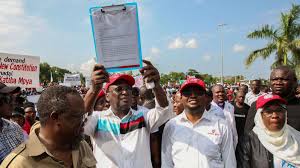
 Dar es Salaam, Aug 13: Tanzanian authorities have intensified their crackdown on the opposition, arresting key figures of the Chadema party and hundreds of supporters. The detentions, which began over the weekend, have drawn significant criticism and raise concerns about the current administration’s stance on democratic freedoms.
Tundu Lissu, Chadema’s vice-chair and former presidential candidate, along with the party’s secretary general, John Mnyika, were apprehended on Sunday in Mbeya. The city was set to host a major conference on Monday in celebration of International Youth Day, organized by Chadema’s youth wing, Bavicha.
John Mrema, Chadema’s director of communications and foreign affairs, confirmed that police also arrested approximately 400 supporters en route to the event. The party had anticipated around 10,000 attendees for the youth gathering, which was reportedly planned to be a peaceful celebration.
Before his arrest, Lissu publicly questioned the rationale behind the police action via social media, addressing President Samia Suluhu Hassan directly: “International Youth Day is celebrated globally. Why are your police stopping Chadema youth on the road and arresting them?”
Tanzanian police justified their actions by announcing a ban on the conference, alleging that the party was preparing for violent protests. Mrema countered, asserting that the event was solely intended to commemorate Youth Day and feature addresses from senior party officials, including Chadema’s chair, Freeman Mbowe.
The situation escalated on Monday when Mbowe and Bavicha leader John Pambalu were detained at Mbeya airport. Prior to his arrest, Mbowe condemned the previous day’s detentions, calling for the immediate release of all arrested leaders, members, and supporters.
Lissu, who is poised to run in the upcoming presidential election, has faced multiple arrests and survived a 2017 assassination attempt. His prolonged exile in Belgium underscores the ongoing tensions between Chadema and the Tanzanian government.
President Hassan, who succeeded John Magufuli in 2021, had been perceived as a reformist, attempting to reverse the authoritarian policies of her predecessor. However, recent actions, including the arrest of protesters and opposition members, have raised doubts about her commitment to human rights and democratic reforms.
This crackdown follows less than two years after Hassan lifted a six-year ban on political rallies imposed by Magufuli, further highlighting the complex political landscape in Tanzania.
