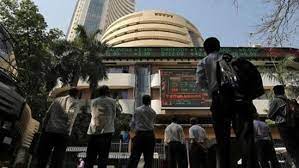
 Firm GDP growth forecasts, inflation at manageable levels, political stability at the central government level and signs that the central bank is done with tightening its monetary policy have all contributed to painting a bright picture for the Indian stock market. India pipped Hong Kong to become the fourth-highest equity market globally, Bloomberg reported. The combined value of shares listed on Indian exchanges reached USD 4.33 trillion as of Monday’s close, versus USD 4.29 trillion for Hong Kong, according to data compiled by Bloomberg. India’s stock market capitalization crossed USD 4 trillion for the first time on December 5, 2023, with about half of that reportedly coming in the past four years. The top three stock markets are those of US, China, and Japan. Cumulatively, the past 12 months have been stellar for investors who parked their money in Indian stocks. Though there has been some turbulence, the calendar year 2023 gave handsome monetary dividends to stock market investors. In 2023 itself, Sensex and Nifty gained 17-18 per cent, on a cumulative basis. They gained a mere three to four per cent each in 2022. Hong Kong’s benchmark Hang Seng Index cumulatively declined 32-33 per cent over the past year, data showed. Notably, foreign portfolio investors have again trained their sight towards India, becoming net buyers in the country’s stock market. In the process, it helped Indian benchmark stock indices taste their all-time highs recently. According to the Bloomberg news report, India, which last year became the most populous country has positioned itself as an alternative to China, attracting fresh capital from global investors and companies alike, due to its stable political setup and a consumption-driven economy that remains among the fastest-growing of major nations.

News Today | First with the news
News Today | First with the news
